5 Signs Your Weatherboards Need Repair
Written by John Gasiamis, Founder — John's Handyman Service
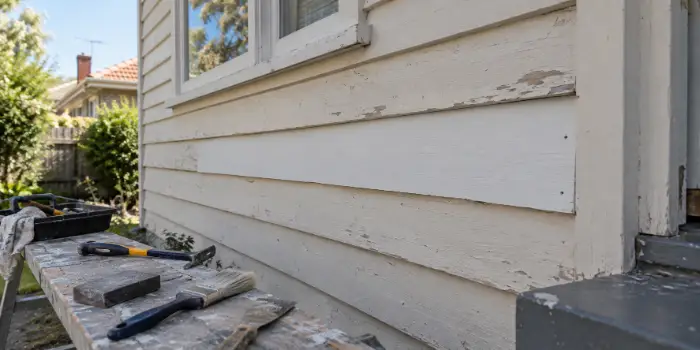
Weatherboard is common through Melbourne's older northern suburbs, and most boards last decades — but a few signs mean it's time to get a section looked at before the damage spreads.
- Soft or spongy timber when you press on it
- Paint that keeps peeling back in the same spot, job after job
- Visible gaps opening up between boards
- Warping or cupping along a board's length
- Small mud trails or exit holes — a sign of termite activity
Catching it early usually means replacing one or two boards. Left alone, rot spreads to the boards around it and the job grows into a full wall section — more timber, more paint, more cost.
How we work out if it's one board or a bigger job
A quick check with a screwdriver at a few points along the wall tells us whether the softness is contained to one board or has travelled into the boards either side of it, and whether it's reached the timber frame underneath the cladding. If it's just the surface board, it's a straightforward swap. If the frame is affected, the repair needs to go a layer deeper — that's a bigger conversation, but it's rare to find on a home that hasn't had ongoing water pooling against the wall.
The honest catch: matching the board profile and paint colour on an older home can take some hunting, especially on houses that have been repainted a few times over the years. A repaired section sometimes needs the whole wall repainted to blend in properly.
On a job in Thornbury, what looked like one soft board near a downpipe turned out to be catching overflow from a gutter that had been quietly dripping behind the cladding for months. We replaced two boards and redirected the downpipe — without fixing the gutter, the same spot would have failed again within a year.
Common questions
No. Paint won't stop rot that's already in the timber — it will keep spreading underneath the paint film, and the damage will be worse the next time it's checked.
Most suppliers still stock the common profiles used on homes from the 1920s through to the 1960s. On older or unusual houses we sometimes need to source from a specialist timber yard to get a true match.
← Part of the Complete Home Maintenance Guide
Insured handyman services for homeowners in Preston and surrounding suburbs. No subcontractors — just our own experienced team.